Wednesday, March 30, 2022

Changing Churches: Reasons to Consider

Just over a month ago our family made a church switch.  After 14 years of membership and service at Bethel Grove Bible Church, we decided to transition over to Christ Chapel.  We deliberated and prayed a lot about the decision, and it wasn’t easy.  We talked with friends and family and fellow Christian leaders. Changing churches isn’t something that should be done hastily or without thought.  This is my second post writing about our move.

The Covid pandemic was disruptive in a million different ways, and our church experienced some serious changes over the past couple of years.  In addition to the regular complexities we lost all three of our pastors.  First our head pastor Eric resigned, followed a week later by our associate pastor Santosh and then a few months later our youth pastor Jeff and his family moved to California to take a job.  How and why each of those pastors left is significant, and maybe I’ll address some of that later, but my main point is that Bethel Grove got rocked! At the risk of being sensational, imagine a city getting hit with a Hurricane, followed by a tornado and then a forest fire.  It’s not that there was nothing left, but especially coming through Covid, everything was ravaged.  


By God’s grace, we certainly continued to have worship services, people still experienced fellowship and God continued to work in and through his people.  But the disruption provoked serious reflection and evaluation.  In the same way that the chaos of the pandemic propelled some people to change jobs, or changed the city they lived in, it seemed natural to at least ponder: should we consider switching churches?


At some level, things were in such a state of disrepair, it really felt like BG was gonna have to ‘start over.’  And that’s not a bad thing all the way -we’ve used the word ‘restart’ with our ministry on campus since we came back from the year of virtual classes and meetings etc.  But From that vantage point we spent time reconsidering some of the basic questions that everyone should ask when choosing a church to be a part of.  


  • Is this church theologically right on? Of course we want to be a part of a church where the good news features prominently and where there is clear and orthodox conviction about the major tenets of the Christian faith.  But beyond some of the primary issues, is this church headed in the right direction doctrinally?  Are they informed and guided by God’s Word? 


  • Do we agree with the way this church conducts its worship services and practices ordinances like baptism and communion?  Are the norms and the “liturgy” informed by a right understanding of God and the gospel.  What’s the style of preaching and musical praise? 


  • Do we like the way this church is organized?  Is the style of church government helpful? How are elders and deacons chosen and what do they do? 


  • Who are the leaders of this church?  Are these people we feel confident following after? 


  • Does this church have a missionary spirit and an obvious passion to reach the world with the gospel?  Is this church set up to make an impact on the local community? 


  • Is this a church where our whole family can be built up and discipled?  Is this a place for men and fathers?  Is this a place that disciples and cares for its women?  How about the children and youth? 


  • What is the community like at this church?  Is there diversity within the congregation?  Is this place welcoming and invitational?  


Beyond this, when choosing a church I think it makes sense to consider relational connections.  You want a church where there is potential to make friends, share life with people and experience meaningful community. 


I think there are good reasons to evaluate a church's reputation in the community, and discern what kind of relationship a church has with the other gospel preaching churches in the area? 


While “vision statements” can be over emphasized in a church, I think it’s important for a church to have a solid sense of direction and calling.  Again, hopefully this is informed by God’s word and not simply cultural trends or popular ideas.  Beyond this you want to try and discern whether it's just talk or if the church is 'moving forward' in any recognizable way.


And for us, because we are in full time campus ministry, we want to evaluate how aligned and passionate a church is about reaching college students. 


For most of our time here Bethel Grove was the church that we felt was a “good fit.”  Of course no church is perfect and BG is no different, but on the whole it has been our place of worship and fellowship.   Over the years we considered going over to Calvary Chapel because we have such a close working relationship with Pastor Scott and his wife Joanie.  Pastor Scott is like a co-laborer with us in many ways, and over the years we have done a lot of ministry together -and we have many students who attend Calvary.  


But evaluating in this season of transition, we felt that Christ Chapel is more aligned with where we are and where we want to go.  One big thing that served to “tip the scales” is the presence of Ben Hutton as pastor.  Ben is both our friend and teammate.  He’s on the pastoral staff at Christ Chapel, but he is also part of our staff team as volunteer staff.  Ben was a student leader here when we showed up in 2008 and he and his wife Hannah have been a huge part of this ministry the whole time we’ve been here!  They were out in Philly for a few years while Ben went to Seminary, but ever since they came back they've been at Christ Chapel.   In light of our shared ministry it makes a lot of sense for us to be plugged in there.  The challenges of campus ministry and reaching the university seem to be increasing and as we navigate the changing landscape, it seems wise to work from the same base camp.


Wednesday, March 9, 2022

Bethel Grove Hospitality

Just over a month ago our family made a church switch. After 14 years of membership and service at Bethel Grove Bible Church, we decided to transition over to Christ Chapel. We deliberated and prayed a lot about the decision, and it wasn't easy. Changing churches isn't something that should be done hastily or without thought and counsel. 

As I reflect on our journey, I wanted to remember the gracious welcome that helped us to plant ourselves at "BG."

Bethel Grove had been our church home since we arrived in Ithaca.  We remember fondly the help and hospitality that they extended to us when we arrived on a snowy night in January 2008.  Our moving truck had been held up and so we showed up without any furniture, kitchen supplies, or bedding.  We had three kids at the time and Titus was just a few months old.  Stephanie’s parents had traveled with us to help us settle in and my sister Rachel was also with us. So the eight of us arrived at an empty house -but thankfully, the good people at Bethel Grove had shown up before us and brought camping pads, air mats, sleeping bags, blankets and towels!  It ended up being a full two weeks before our moving truck arrived and so we camped out with the donated supplies that whole time.  


Our first morning in Ithaca, Ned Lacelle showed up with a coffee maker and coffee.  Ned and Karen are now some of our dearest friends.  BG’s Pastor,  Dave Jones lived just down the road and so he popped over to greet us warmly.  Barb Westin from Intervarsity was also a neighbor as well as the Fisher family.   The church had known of our predicament because our landlady was Edith Johnson who works in International student ministry and the guy who helped us find the house to rent was Doug Webber who serves with the Navigators.  All of them were part of the Bethel Grove Congregation.   


The hospitality we received from Bethel Grove those first days was awesomely helpful and generous.  And by meeting  so many members so quickly, we felt immediately connected to the congregation.  We had anticipated checking out a few churches, and we did visit some in our first months here, but it seemed to make the most sense for us to plug in with BG.  Our team mates Nic and Christy also joined Bethel Grove. 


We had actually met pastor Dave Jones and Eric Hause back in November of 2006 when we first visited Ithaca.  Upon arrival we also got to know Pastor Ken Jung and his family.  The preaching at Bethel Grove was full of grace and BG’s passion and commitment to global missions was something we were excited about.  In our first few months we got plugged into a small group where we made many good friends, and to this day we are still in a small group with the LaCelle’s, Butcher’s and the Cuykendall’s 


Certainly the hardest part of switching churches is relational.  Ithaca can be quite transient with people coming and going in connection with Cornell and Ithaca College and yet there are many who we’ve been worshiping with for years.  There has been real grief in this transition process as we recognize there are people we simply won’t see as often. 


Monday, June 15, 2020

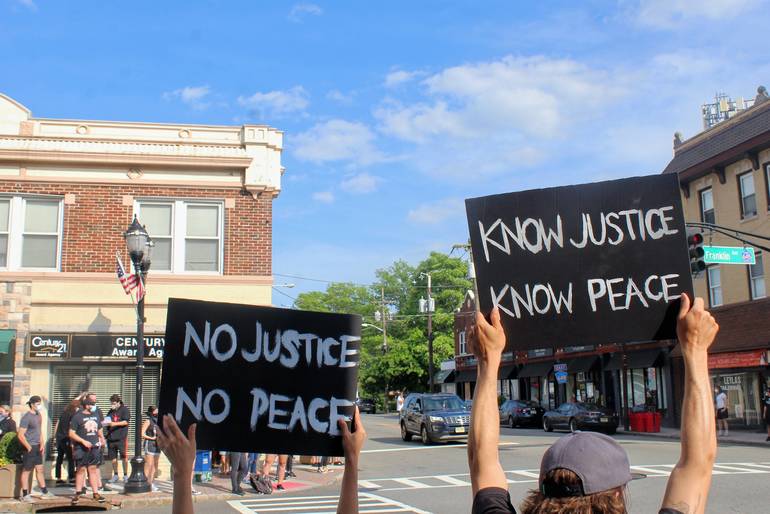
No Justice, No Peace

Social distancing & social justice: Demonstrators hold 'car march ...
I personally love this slogan, and whenever I have seen it over the years painted on signs and held up at rallies and protests, I have felt glad.  I love seeing it, because this idea -No Peace without Justice, is true. Understanding this reality can drive us to Christ and give us greater passion for the gospel!  

As I write this, our country is full of street protests instigated by the unjust killing of George Floyd. There is a definitive lack of peace in our country right now, and everybody feels it.  If you attend a rally or simply watch the news, you will see somebody holding up these kinds of signs. 
Scores of Local Students Join Black Lives Matter Rally in Nutley ...
Back when I lived in Spain I witnessed many protests or street "manifestaciones".  The Phrase "No hay Paz Sin Justicia" was common there as well. In Spanish, the word Justice and the word Righteousness are actually the same word: Justicia. This is a fascinating linguistic connection in itself; justice and righteousness are virtually synonyms. True justice is always righteous, and true rightness shines forth in the world as beautiful justice.  Peace and Righteousness are massive Biblical themes and upon studying them I discovered that they typically go together. 

The opposite of righteousness is “sin."  Sin is 'wrongness." Sin is everything that flows from man's self-centered rebellion towards God who is the source of everything right and just and true.  The Bible affirms that all have sinned and fall short of the glory of God.   Sin is the reason that mankind opposes God and fights with one another.  There is no peace because man is disconnected from the one who is righteous.  This lack of peace infects our world, our homes and our hearts.   We have unjustly mocked God, turned from God and tried to live without God; and now everything is messed up.  
 
Jesus, who is called the Prince of Peace, came to earth to take away the sins of the world.  Jesus  lived a perfect, sinless, righteous life and then after three years of teaching and doing ministry he went to the cross.  At the cross, Jesus took the unrighteousness of man upon himself, and then endured God's holy wrath towards sin.  Because God is just, he could not simply allow evil to go unpunished.  There would not be true justice for God to simply say, "well, it's unfortunate that mankind joined Satan and traded in a world full of life, beauty, truth and love for a world full of hate, murder, exploitation, abuse, lies and death.  I know that that there has been a lot of evil in the world, but let's just try to forget about it and move on."  NO.  God will not just move on because that would be wrong.  God hates evil, and the righteousness of his character compels him to destroy the power of sin.  

The Bible teaches us that the wages of sin is death and because "all have sinned',  every person deserves to die as a result of our rebellion towards God.  (Romans 5 makes it plain that sin is the reason that physical death exists.  And the book of Revelation talks about "the second death" which is a spiritual separation from God.)  Dying on the cross, Jesus took our sin upon himself and paid the death penalty that we deserve.   

The cross was a demonstration of God's mercy; Jesus lovingly died in our place.  And the cross was also a demonstration of God's perfect justice; God doesn't simply ignore sin, he opposes and crushes it.   By dying on the cross, Jesus has demonstrated and vindicated the righteous justice of God.  

A Christian is a person who puts their faith and trust in Christ. The Christian receives God's forgiveness for sin that was purchased by Christ with his blood on the cross.  Christ took our unrighteousness on the cross and now we, through active belief  are credited with his righteousness. The Bible teaches that "in Christ" we are able to be reconnected with God.   In Christ, we are "justified" which means declared innocent or declared righteous. Again, we see this justice/righteous connection!  

Romans 5 summarizes this beautifully: Therefore, since we have been justified through faith, we have peace with God through our Lord Jesus Christ, 2 through whom we have gained access by faith into this grace in which we now stand. And we boast in the hope of the glory of God.  Peace comes through justification. Now it's very important to notice that the peace referenced here is peace with God.  Again, sin is rooted in our rebellion and separation from God.  Our primary conflict, from which all of our other conflict flows is our pride-fueled contempt for our creator.  Before peace can flow out into any other part of our lives, we need to live at peace with God.  

And again, because of Christ, we can!    There can't be peace without righteousness and Christ who is God is the source of true righteousness. We need Jesus in order to be set free from the power of sin.  Sin is the reason for every conflict, fight and war.   But until we surrender to Christ and cease our conflict with God and experience peaceful reconciliation with Him, we don't have the resources to see peace manifested in the world.  We will continue to be a part of the problem until we are reconciled to the solution!  And so we uphold, that there is no peace without justice and both are found in God.  So we make known and make visible the good news of Christ, the righteous prince of peace.   And living transformed lives marked by the peace and power of Jesus we are able to act in the world to promote right over wrong.  
No Jesus, No Peace Hoodie

Thursday, January 31, 2019

Life Requires Death (Joel Salatin Notes)

In Chapter 4 of Joel Salatin's book"The Marvelous Pigness of Pigs' he provides some powerful Biblical perspective on why eating animals is o.k. in light of the Christian's desire to honor animals and treat them with reverence.  I meant to post this a couple of months ago and it sat in draft form!   I'm basically just posting this section verbatim.  Please enjoy.  

"Perhaps a big issue we need to deal with at this point is the push back that if life is so special what gives us the right to kill and eat? 

How does killing the pig honor it's glory? How is the "pigness of the pig" reverenced when we enjoy bacon for breakfast?  That's certainly a valid question. 

First let's look at this Biblically.  Nowhere does the Bible even hint that eating animals is wrong. The Patriarchs ate animals.  The Prophets ate animals.  The kings and peasants all ate animals.  The feasts included animals. Jesus ate animals. The disciples and apostles ate animals.   

How does killing and eating animals add strength to their glory? Because life requires death. 

While it's true that killing a carrot in the big scheme of things is no different from killing a chicken; when the blood flows and the eyes go dim it's far more graphic and real. 

The typology of sacrifice preceding life occurs throughout the old testament and culminates of course in the ultimate sacrifice of God's son as the perfect lamb to take away the sins of the world.  Every time we kill something whether seed embryo (wheat) vegetable or animal in order to live, it should remind us not only of the sacrificial death of Jesus that enables us to partake of eternal life but also how precious life is. Life is so precious that it requires death. 

The goal of radical animal rightists working through research scientists to grow non-living meat like substances from human feces or primal slime in petri dishes is a denial of this foundational principle that life requires death. 

Jesus uses the principle of seed being planted and dying before sending forth the new shoot.  Unless it dies the new shoot can't come forth. Everything, everything, everything requires death in order to create life. And lest anyone think I'm skipping the Edenic period when nothing died -we're not in Eden anymore Toto!  We don't have perfect bodies.  We live in a fallen world in which bringing glory to God includes appreciating the cost of life in him. It is precious enough to require death.  Eating reminds us of that with every chomp of our jaws.  

Our sustenance is completely and utterly dependent on taking life; be it plant or animal.  That alone should drive us to appreciate the sanctity and precious value of life. That means we don't hurt people and things unnecessarily.   

We are all one step away from our last breath. Every breath is a gift borrowed or snatched from the hands of death. 

That's the biblical part.  Now let's go to the ecological part.....

...I would suggest that what makes the sacrifice of any being sacred is how it was honored in life. To take that one step further, I would even suggest that only when we've honored the life do we have the right to make the sacrifice.  In other words someone who has abused the life, disrespected the life, looked at it as just inanimate stuff does not deserve to kill and eat.  

The right to participate in that sacred act must be earned.  

Think about the worship surrounding Biblical sacrifices.  Every one entailed a hush -a God-centric demeanor.  Sacrifices were not a place to exalt the dominion of man but a place to humbly appreciate the cost of life.   And of course alter sacrifices show the cost of forgiveness which is the door into eternal life. Viewing life as mechanical like industrial farming does cheapens it, which in turn cheapens the death. 

Is it any wonder that our culture is wrestling with increased violence among humans when we cheapen life through CAFO's and a cheap food policy -which is actually a cheap life policy.  

Food is life.  Food must live in order to die. 
families who spend extra on high quality food, who emphasize sacrificial value in food  create a beautiful platform for explaining the cost of salvation. If our food goal is the cheapest stuff available, what does that say about the cost of physical life?  By extension what does it say about the cost of eternal life. 

Please don't construe my meaning beyond it's intent.  I'm not suggesting that we be careless about shopping and comparing prices but price is definitely not the number 1 criterion.  Glory. Does this food honor life's distinctiveness is the number 1 criteria.  After that's been met, then be frugal! 

Tuesday, December 11, 2018

Why I eat less Fast Food

Anyone who has hung out with me since this last summer knows that I’ve been eating very little fast food.  I wouldn't say I was eating a ton of fast food before -in fact, I began to actively reduce my intake a few years ago in an effort to facilitate better blood health.  But reading a book by Joel Salatin titled “The Marvelous Pigness of Pigs” has made a veritable impact on me and our family.
Image result for taco bell


I’ve always loved fast food; I used to work at McDonalds and I’ve been a notorious advocate* for Taco Bell.  In fact, even recently I would dream and scheme about how cool it would be to run a fast food restaurant! I used to scoff at people who got over emotional about how “nasty” or un-healthy fast food was.  In my heart I felt they were mostly driven by a desire to appear sophisticated and set themselves apart from the masses or else they were weak minded people who got worked over by the “Super Size Me” documentary. I would often challenge people to be less picky and be open to more fast food if only for the sake of table fellowship. Suffice it to say, i was never looking for an excuse to stop eating fast food! And, while we haven’t completely stopped eating it, I now try to avoid it for the most part. I’m thinking very differently about the fast food industry, farming, food production and nutrition.  And my change in thinking on these things is being facilitated mostly by theological discussion on God’s design for creation and for our bodies and even for human work.


Joel Salatin is an inspirational  guy who describes himself as a  "Christian, libertarian, environmentalist, capitalist, lunatic, farmer".   He’s fairly well known among permaculture and organic farming types. Joel not only runs a farm regarded as ‘beyond organic’ called Polyface Farm down in Virginia, but he writes books and gives lectures all over America.  (He actually came and spoke at Cornell a few years ago and unfortunately I didn’t really know who he was at that point so I didn’t make a huge effort to go and hear him. If he came back, I would try and hang out with him all day!) 


Joel is a passionate educator who mostly helps people learn how to farm in ways that are sustainable, healthy and ecologically beneficial.  Even though most of what he promotes seems like old fashioned common sense he’s often considered a “radical” and a revolutionary. He is certainly creative and innovative.  Joel takes a lot of heat because he’s an outspoken critic of industrial farming practices and food systems driven by greed and sustained by exploitation. But I think Joel is  helpful because he labors to farm in ways that are fundamentally glorifying to God. He makes a point not to divorce his theology and his understanding of God from his farm work and business practice.  Again, that sounds like simple Christian integrity, but when you step back and realize how un-thoughtful we can be about God’s design and how He would have us interact with animals, produce food and take care of people, you can see that most of us are carelessly  hypocritical and un-Biblical!


One of Joel’s newest books is titled “The Marvelous Pigness of Pigs.”  Most of what he writes (I think) are practical “how to” books about how to farm under girded by theology and the Christian worldview.  But this book is a theological treatise with farming and food production in view. It’s a challenge written specifically to American Christians addressing Creation care and stewardship of the earth.


In my next post, I’ll share with you one of my favorite parts of Joel’s book.  For now, I just wanted to tell you how much I’ve been impacted and recommend it to you!  

*On top of eating at the Bell throughout my life, I've incorporated Taco Bell into most 'special events' in my life. My wedding, the birth of my children, mission trips, tourist journeys. I also claim to have "invented" the 'Double Loco' Taco with my kids. LOL

Tuesday, November 20, 2018

We Do Awkward Things

Often times when talking about the way that Cru staff like us go about raising their funds -whether we are talking to student leaders, people at church or even some of those who actually support our ministry, people will say something like: “It seems really awkward to ask people for money.”   Implicit is a sort of “I’m glad I don’t have to do that” and sometimes there is a general “You shouldn’t do that either.” sort of vibe.

In response, we can talk about the Biblical precedent for missionary fundraising or cast vision for the amazing way that “ministry partner development”  enables more people to actively engage in Great Commission work. We can rightfully highlight the way that the work of fundraising builds faith and even galvanizes  conviction in the heart of the missionary. We can explain that what people give is ultimately an offering to God -it’s supposed to engender true worship and God-dependency.  But with all that, I have no qualms admitting: It is awkward!

It’s awkward -uncomfortable, odd, sometimes even humiliating to initiate a conversation with someone and ask them to give money.  But when you get down to it, most of our job is awkward. Raising funds to work on campus is just the beginning!

After we get done with that we spend time sitting down with random strangers in dining halls; we strike up a conversation and trust God to help us talk about spiritual things.  (In Asia, we didn’t even have the necessary meal card so for every meal we had to ask a stranger to swipe their ID just to get us some food so that we could then sit down at the tables and make new friends.)   We set up tables in high traffic locations and invite students to fill out spiritual interest surveys or interact with deep spiritual topics. During the afternoons and evenings we sit in rooms and open the Bible prompting people to talk about their shortcomings, weaknesses, sins and need for God -in short, we host awkward conversations.  We plant ourselves in residence halls -believe me, as I get older, this is only getting more awkward! We hang out in fraternity houses. We set up tents and signs, we send emails and facebook messages where we identify ourselves with Christ and ask people to interact about God. We do awkward things.

One of the main reasons I believe in Cru’s ministry partner development model is that it prepares people for the awkwardness of ministry.  A person willing to endure the awkwardness of support raising will probably be ok stepping out on campus. Doing evangelism in our culture is awkward. Asking somebody who is having a hard time if you can pray for them can be awkward. And yes, raising funds the way that we do is awkward; it's not only awkward, but that's part of it.

As we proceed in ministry I can only ask that Jesus give us the courage and humility to press into the awkward space.     

Monday, October 29, 2018

"Wartime Walkie-Talkie"

In 1988 Pastor John Piper* delivered his sermon titled “Prayer; the Work of Missions.”   Even amid a long list of famous messages I’m pretty sure this is one of his most well known.  The sermon is full of great theology, inspiring insights and a powerful exhortation to pray! Prayer is a gift from God -it’s a direct line of communication with our heavenly father and we are missing out on all kinds of help when we forsake it.  ( We try to listen to at least parts of this talk every single year with our student leaders.)


In the sermon, Piper spends a lot of time talking about spiritual battle and unpacks scripture to explain that “life is war”.  One famous punchline in the talk is this: “Until you believe that life is war, you cannot know what prayer is for.” He contends that without a “wartime” mentality we will ultimately overlook the vital importance of prayer and miss out on all that God has for us in it and through it.  


Piper compares prayer to a “wartime walkie talkie”.  In the midst of our spiritual battle, it’s a life altering, gospel advancing means of communication with our heavenly father.  When we fail to recognize that life is war, we inevitably don’t pray, or we use prayer as though it were a “domestic intercom” system that we might use in a house to call for more pillows in the den.  We end up self-centered and misdirected, there’s no intensity, and it lacks power in our lives.
At our Ironman Men’s time we play paintball on a course we set up about 8 years ago.   When we host paintball events we try and not only facilitate a really fun time, but also make it as purposeful as we can by having a short ‘debrief’ at the end.  We have the students play different games and in the end we gather up around some food and have a discussion. (We use basic experiential process learning skills.)  The discussions are not sermonic, but they are places where we can introduce spiritual concepts, interact about worldview and hopefully help people to understand the glory of life in Christ more adequately.  
This year, in order to talk more about prayer and the spiritual ‘wartime mentality’  we invented a paintball game we called “Wartime Walkie Talkie.” Through victory in another competition, one of the teams was given an actual walkie-talkie.  Then we placed our intern Scott up in tree in a deer stand right in the middle of our paintball course. Scott is a very good paintball player because he played on the Cornell club team.   Scott also had a walkie talkie.


The team with the walkie talkie was able to communicate with Scott and ask him to shoot guys on the opposing team or provide cover fire as they advanced.  The opposing team was not allowed to shoot Scott -he was invincible. Scott had the ability to survey and see the whole course from his elevated position and was easily able to take out the enemy.  Likened to the way that we as Christians can easily speak to God and ask him for help, the team with the radio was able to take advantage of Scott’s power.

It was a pretty powerful object lesson that one of the teams was really able to benefit from.  Having Scott up in the tree raining down paintball’s a was clear advantage, and when Lucas Raley's team had the walkie talkie they asked Scott for help and achieved victory without even losing a player. Depending on Scott was a wise move! Another one of the teams however -even though they had the walkie-talkie didn't use it at all! It was crazy! Watching it was painful and almost maddening! They had access to this definitively "game-changing" advantage and they were just scampering through the battlefield un-assisted with the walkie-talkie in their pocket!! It was unbelievable -except that that's pretty much how we live all the time!

Josh is a student leader who happened to be on the opposing team and he was also deeply impacted by the situation. The game taught him about having a righteous reverence or fear of God. He said: "It gave me a better idea of what Biblical 'fear of the Lord' is like. I wasn't scared because Scott was mean and unpredictable; I was scared because he was so powerful and could light me up if he wanted to! In the same way, even as God is loving and merciful and just, I should fear Him for how powerful he is." The game provoked Josh to think about what it means to sin against God. Josh said "Sinning is like shooting at Scott -which is clearly a bad idea!" Why do we think it's ok to flippantly and defiantly offend God?

Picture Credit: Christina Thomas

*We really appreciate the ministry of John Piper and we highly recommend his resources which can be found at https://www.desiringgod.org/

Wednesday, September 27, 2017

Temi's Real Life Video

Temi is a Nigerian student who I actually made contact with even before she enrolled in Cornell last year because she was actually living in New Mexico! (Cool story)

She took some time the other night to record things at our weekly large group meeting.

This is a fun look at our Friday night gathering.


Monday, August 7, 2017

#GOspitality

Offer hospitality to one another without grumbling. Each of you should use whatever gift you have received to serve others, as faithful stewards of God’s grace in its various forms. 1 Peter 4:9-10
“Hospitalero” is a colloquial term used in Northern Spain to designate those who function as hosts in the “Albergues” or pilgrim hostels along the Camino de Santiago.  Cru actually bought an old Farm House in a little farming community called “Ligonde” and we renovated it into a hostel.   We would host 10-15 pilgrims each night throughout the summer, providing beds and food to the travelers at no cost.   
I love the word “hospitalero” because it basically translates to “hospitality guy” (or girl); it’s a meaning packed synonym for “host”   I like the word a lot because hospitality is such an important component of Christian ministry.  In fact, I think all Christian ministry can ultimately be described as a mission of hospitality.
Hospitality means expending yourself -your energy and your resources, in an effort to welcome, accommodate, serve, bless, and provide for others.  We see in the root, the word hospital, which of course is a place where doctors and nurses labor  to sustain people’s health, and cure them of sickness and disease. To be hospitable means contributing “life” to others!    Being hospitable involves creating life-giving spaces and interacting in life-giving ways.  It means facilitating rest and recreation for others; traditionally strangers or non-Kin.  A hospitable person is one who provides sustenance -food, shelter and even protection for people.  When you think of someone who is hospitable you think of someone who is extremely welcoming and inviting.  Hospitable people are those who reach out and care for you.  Maybe you also think of great parties!  Those who are really hospitable can turn even regular everyday activities into a party because they are so loving and warm and full of joy.   
The good news of the gospel is that God in Christ has expended himself to provide for and bless us with life.  He has opened his home and he welcomes us with love that is free and undeserved.    He laid down his very life so that we could be set free from the tyranny of sin and find rest and joy in him.  God is the original missionary, God is the ultimate “hospitalero”
As part of God’s family, disciples of Jesus Christ are called to join God in his mission of hospitality.  We get to steward God’s grace, enabling others to experience his glorious rest.    Following after Jesus, we have been commanded to love others, serve and expend ourselves joyfully -even  laying down our lives so that others might hear and understand the good news of Christ crucified, buried and risen. Jesus said “Go, and make disciples of all nations”   We get to tell people everywhere about God’s amazing grace and the good life found in him.   

Because it’s Gospel-driven  we call it “GOspitality”  

Monday, July 17, 2017

Stronger to Serve


At the beginning of the summer, Lydia, Esther, Mike and I participated in a Tuff Mudder with some other Cru staff and interns.  The Tuff Mudder is a great team building exercise and we had a really great team!  Cassie and Mercy got to serve as race volunteers.


I wanted to share one lesson I took away from my experience.  It boils down to this; the stronger you are, the more you can serve.  

In order to prepare for the race it is important for most people to do some type of training.  During the spring, it could be argued that my training regimen was somewhat minimal.  Additionally, it was sort of rushed;  I only ramped up my running just a few weeks before the race.  I was basically ready to go on the day of the event, but because I was just barely in shape  (and because I'm getting older) I did end up straining my knee during the race and by the end I was limping it in.   (Thankfully Oscar had the same knee pain, so we ended up slowing the team down together.)  

I would love to do the Tuff Mudder again, and If I do, I want to train more and ensure that I get a lot stronger before the race.  But not so much for myself actually; I am proof that a minimal amount of training and preparation is enough to enable a person to make it through.  I did it.  But being stronger would have enabled me to better serve my team as well as lots of other people on the course. 

What I love about the Tuff Mudder is the way that it facilitates and encourages cooperation and togetherness.  You really can't do the Mudder course all by  yourself and you aren't supposed to!  It's set up to be an adventure endured in community. (That's Biblical!!)  Being really strong doesn't benefit you as much as it benefits everybody else!  The stronger and more prepared you are, the more people you can help. You can stand there and help more people surmount the obstacles, you can push more people up the walls, you can pull more people across the berms of mud.  Being in super good shape doesn't mean you're just gonna go faster and get a better time, because that's not what the Mudder is all about.  It's about teamwork and helping others. 

And the stronger you are, the more people you can help. 
 
I've been thinking about how to apply this spiritually.  It can be easy so often to be pretty "minimal" and "rushed" in our walk with God.  And because it's all about his grace, we will make it to the finish line.  But doing it like that means we are missing out on opportunities to serve others like we could be. 

I want to encourage you to run hard after God and allow him to grow you and develop you and build you up strong.  Dig into God's Word, let his promises sink deep into your heart and fight hard to live by faith.  Train hard and strive to run the race of life "strong in the Lord and in his mighty power" (Eph 6:10) so that you can help more people to experience the glory of the gospel.


Monday, May 8, 2017

Un-Crushed Students

We like to say that there are two versions of every Cornell student.  There is the regular version; a person who is brilliant, purpose-driven, often creative, optimistic and relational.  And there is the crushed version of that person: A person who's mental acuity, drive, vision and social abilities are fundamentally impaired by the "crushing weight" of homework, academic pressure, resume building extra-curricular activities,  un-ceasing competition and complete lack of margin. 

One of the best things about spring break trips is the way it enables us to spend time hanging out with the "un-crushed" version of our Cornell student leaders.  


Our spring break trips afford students the chance to get off campus, take a break from homework and get some fresh air.   The grace of the gospel pervades every aspect of the week.  And with our focus on Jesus, serving others and enjoying fellowship together the students are able to connect with God and each other in some really powerful ways.  The non-stop "success driven" culture at Cornell is actually very stifling.  But traveling together over the break is thoroughly enriching; students are categorically more joyful, clear thinking and social on the trips.  They are "un-crushed."   Lots of spiritual growth happens specifically because there is adequate mental and emotional space.  
 
I personally believe these experiences are invaluable for gaining perspective.  So much life at Cornell can become a neurotic shuffle from one intense class or assignment to the next.  It's "productive" in it's own rite, but at what cost?  Getting away for a week of doing nothing has it's own merits.  But for those who spend their week hanging out with friends, exploring ways to love others and soaking in God's word it is extremely fortifying.  


This is one of our guys, Paul, exhibiting some of the extra life students have on these trips!  haha. 


Wednesday, April 26, 2017

A Baltimore Reflection

Senior Andrew Shi wrote a fantastic reflection on our Baltimore Spring Break trip.


My spring break trip to Baltimore/DC was more than I could ask for. Our team of 18 stayed at the Village Church in Baltimore, a young church whose members reflect the diversity of its local neighborhood. Our week consisted of an assortment of activities. In Baltimore, we toured the city, handed out flyers for the church, did construction work on the church, went on a prayer walk in the surrounding neighborhood, tutored with an after-school program at an inner-city school, learned about World Relief, and participated in campus evangelism at UMBC. In DC, we toured the city, attended a prayer meeting at the headquarters of International Justice Mission, flyered for a new Hispanic Church, and met with church planters as well as a missionary inside Capitol Hill to learn about the spiritual climate in our nation’s capitol.
Andrew (center) with Michael and Dennis in DC

When I first saw the scheduled events of the week, I felt disappointed that the trip seemed to have no clear vision. I was hoping to work towards one big project--something to show at the end of the week. Now I realize how God used the little moments--from driving to YMCA at night to take showers to making food together at 10PM in the church’s tiny kitchen--to teach me big lessons. If there was one word to capture what I experienced and learned, it
would be “community.”


To be sure, being around the same people for seven straight days is itself a community-building exercise. What made this community special, however, was not the fact that we were physically together. It was the goal of each member to love one another that moved me. Not once on the trip did I see anyone complain about being off schedule or feeling too tired to sign up for the next breakfast shift. One night during our team time, we did a group-bonding activity where we took turns saying positive things about one person in the group for one minute. The exercise, as one member put it, was both affirming and humbling. As someone who loves to be independent, I tend to shy away from the messiness of groups. But my experience on this team helped me to see that to live and serve together with other Christians is a joyful rather than a burdensome duty.


Andrew using the Perspective Banners to talk about Spiritual Beliefs
Beyond our team, my experience of community came from observing how members of the Village Church served us. The Village Church’s members demonstrated their hospitality to us throughout the entire week. On two separate nights, I had dinners at people’s homes nearby the church. On two separate nights, I took showers at people’s homes nearby the church. The church members welcomed us into their homes--often late into the night--without reservation. They took us in as their own and expressed a genuine desire to get to know us.


I want to recall one conversation I had with two young professionals who lived near the church. Both emphasized to me the importance of living close to a local church and being involved in the daily life of the church. While this advice may appear obvious, it was not something I’ve taken seriously as a college student. To think of it, school is arguably the only time in life where I will be around people exclusively my age, who do more or less the same things I am doing--classes, clubs, sports, etc. It has been easy--perhaps natural--for me to pick and choose my community and to be involved in as much or as little as I want, when I want. As a consequence of the four-year turnover rate in college, I’ve grown comfortable with the transient flow of friendships and responsibilities, and in turn, my conception of community. This spring break trip jerked me out of the college pond and gave me a glimpse of the ocean of the real world. The two young professionals I spoke with talked about how God worked through their life through the church. Both belonged to community groups. Both were being mentored by older women. Both found ways to serve inside and outside the church. Their advice unsettled my narrow and selfish conception of community.


I confess that throughout college, I’ve often treated Cru fellowship time or Sundays at church as just another block of time on my schedule. God convicted me of these sinful and misguided thoughts this week. I realized that my primary obstacle to a deeper engagement with the body of Christ was not some well-meaning excuse but the pride of my heart. I wanted community on my own terms. Weary of falling into a Christian bubble, I considered it weak to develop a dependency on the Christian community. As a result, my imagination of what community looks like and what it can do has been so modest.


Praise God for revealing these truths to me in this time of my life. I am one month away from graduation as I think about these things. When I begin law school in the fall, I will have the opportunity to be involved in the law school’s Christian fellowship as well as the local church. Community there will not look the same as community here, but it will still be God’s body of believers. With what I learned on this spring trip, thanks to your prayers and support, I look forward to deeper waters that lie ahead.

Monday, February 27, 2017

Jesus and Uncle Drew

This week I came upon the "Uncle Drew" videos that Kyrie Irving made with Pepsi.*  In episode 1, Irving gets made up like an old man (Uncle Drew) and shows up to a city park basketball court in New Jersey.   He looks like an elderly guy who probably isn't able to get anything serious done on the court; he seems frail, and possibly even a bit senile.  No one regards him as any sort of "force to be reckoned with" but as he begins to play with the "youngbloods" he slowly reveals his incredible skills.   Onlookers are "wowed" as he proceeds to warm up and then dazzle the court with authority.

The whole scene is intriguing.  This unlikely, seemingly fragile man steps up and conquers.  It's got some "underdog"  motif, the ordinary Uncle Drew, turns out to be an extraordinary NBA star!  He looks like some regular old guy with absolutely no game at all, but in fact he's a champion of the game!

This narrative that captivates everyone!  The people standing on the side of the court are completely enchanted, and pretty much so is anyone who dials it up on youtube!

I would say there's a certain "glory" to the whole thing.  And I suggest that the reason it's so enthralling, the reason it strikes us being so "cool" is because of the way it essentially "echoes" the gospel story.  What Uncle Drew did was pretty cool; he showed up looking like a nobody and then proceeded to inspire everybody!
Reminds me of that time Jesus left heaven and took on the form of man.  He didn't seem like anything special, but in fact he was supremely so.  He seemed an unlikely champion, but as he lived, died and rose from the grave he revealed himself as the ultimate victor.  Under-estimating him is easy to do, but it is only to our shame and detriment.

Pepsi and Kyrie came up with a cool story.  But Jesus thought of it first.

*I think these were made like 4 years ago or something.  I'm not sure, but I guess I am a bit "late to the party" on these vids.  

Monday, November 14, 2016

God's Plan for Ben

Ben got connected to Cru during his first few days on campus back when he was a freshman.  But it wasn't until he attended our "Ironman" men's retreat that God really got a hold of his heart!

At our Fall Getaway this October, Ben got to share his story with everyone.  It's an amazing testimony of God's pursuing love!


Friday, September 9, 2016

Leader Profile: Lucas Raley

When Lucas Raley picked up a double headed ax and instigated a game of "chop the burning catapult" with Jake Haddock, I knew he and I were gonna be great friends!  During our Men's retreat we had a "trebuchet build off" where I had teams of guys construct primitive catapults which we used to launch pumpkins.  Calibrating a trebuchet is quite challenging and in the end none of them launched very well.  But, they burned just fine!  Since they were made from scrap fence and pallet wood we heaved them into the fire once it got dark.  That was cool enough, but it got even cooler when Lucas and the fella's decided to deconstruct it while it was catching on fire!  What a riot!  

We talk about junior Lucas Raley a lot in my family.  Not only is he an incredible student leader who happens to be dating one of our staff interns, but he's a hero to my kids!  From Jack on down to Junie, Lucas is one of our favorite people in the world.   Lucas' fun-loving, gung-ho spirit is inspirational, helpful and contagious!  Because he was here working in Ithaca this summer we got to spend a lot of time together.

Lucas plays on the Cornell football team, but he's struggled with a back injury for the past two years.  Commenting on his back pain, Lucas said "Originally, I thought it was just going to be a few months of taking it easy and it would be recovered, but God had some other plans."  Lucas had hoped to be starting all last year during his sophomore year, but it just wasn't working out!  That was frustrating, and yet it gave Lucas the opportunity and the space to grow in his walk with Jesus.
  Lucas said that when he came to Cornell, he "had been completely wrapped up in the belief that being a starter on the team was what it was all about."  He said; "Having played in several games during freshman year behind a player that had graduated, I was convinced that it was my time to shine. But, what God aggressively informed me of is that it was not, nor will it ever be MY time to shine. However, it is always HIS time to shine."  Having his own plans and dreams disrupted enabled Lucas to recognize and rest in God's plan instead.  

"No longer having my Friday nights occupied with football, I had decided to try out this “Cru” thing that I had heard about from a few people.  So my friend Cole and I decided that we would check it out. That first Friday that we went, about three weeks into the year, we showed up and were immediately welcomed by tons of people that we had never met.  The gospel band played that night which was amazing, and then we heard a solid message. The next week we went back and then heard the announcement for the fall retreat which happened to be on a weekend that we had a Friday night game, giving me the opportunity to go after the game and spend the weekend at the retreat."

 Although we had met before, I remember clearly last fall when Lucas walked up to me with his friend Cole and said "we want to go to the Fall Getaway!"  Lucas came up to our Seneca Lake retreat and he's been a huge part of our ministry ever since.  Although it was a bummer to be injured, God redeemed the time tremendously and we've all been able to benefit.
Lucas Raley is all in.  Starting with that Fall Retreat he's been a faithful and passionate part of Cru.  This summer we got to spend some good time working at the Second Wind cottages together each Saturday.  We also got to cook every Wednesday night for our Summer fellowship.  This semester Lucas is helping to lead a Community Group.  More football guys are being given the chance to connect with Christ and walk on mission like he is.  

It's hard for me to express how grateful I am for him.  He's a faithful man of God, an incredible student leader and a beloved role model to our kids!  Lucas is a blessing to his fellow Cornell students and to our family.